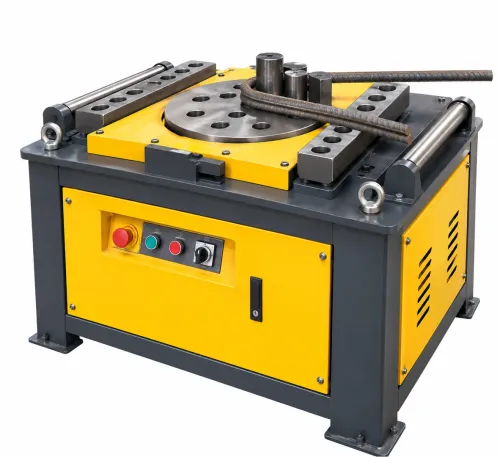
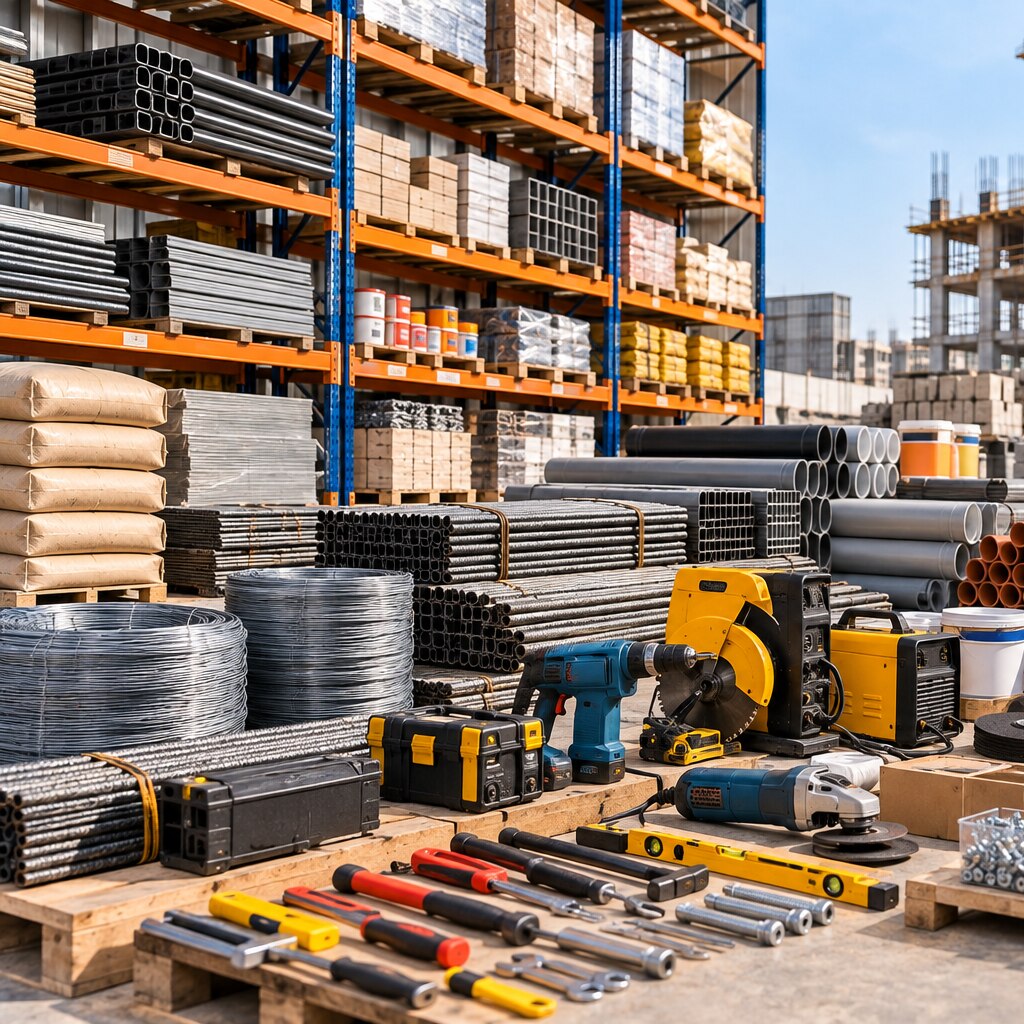
Contractors lose time when machines, fasteners, consumables, and site equipment arrive from disconnected suppliers with incompatible specifications and no shared delivery plan. You will be able to build a procurement schedule, compare quotations on operating cost rather than purchase price, and decide when to buy, rent, or subcontract each requirement.
Key takeaways
- Create a measured BOM before requesting wholesale quotations.
- Compare machine output, operating cost, maintenance, and support—not purchase price alone.
- Choose buying, renting, or subcontracting based on duration and utilisation.
- Confirm site readiness, safety documents, delivery terms, and acceptance criteria.
Build a Procurement Plan Before Requesting Wholesale Quotations
A comparable quotation starts with a measured bill of materials (BOM), not a request for “all required hardware.” Contractor procurement becomes expensive when suppliers quote different grades, capacities, quantities, or machine configurations under the same description.
1. Build the BOM by work package and drawing reference. State item description, standard, grade, size, unit, quantity, acceptable substitute, and required delivery date.
2. Classify each line as a consumable, replacement item, production machine, or site equipment. Identify blades, electrodes, nozzles, filters, belts, lubricants, fasteners, anchors, lifting accessories, and spares separately from the machine.
3. Add performance and site data. For equipment, specify material, thickness, throughput, tolerance, duty cycle, motor power, phase, voltage, frequency, footprint, utilities, guarding, and extraction. Check IEC 60204-1 documentation, protective bonding, emergency-stop functions, and local electrical compatibility. For lifting gear, state configuration, sling angle, hitch type, working load limit, markings, traceability, and inspection documents.
4. Request prices against identical quantities, Incoterms, installation, training, warranty exclusions, spare-part availability, service response, and delivery sequence. Separate factory acceptance testing from site acceptance testing so project buyers know what is proven before shipment and what depends on site installation.
This structure lets wholesale hardware supply vendors quote like-for-like goods instead of competing descriptions. Schedule every line against the erection programme: early delivery creates storage risk, while late delivery strands labour and lifting equipment.
Compare Equipment Quotations by Production Cost and Support
The lowest purchase price can hide the highest operating cost. Compare each quotation by cost per finished part across the expected volume, including tooling, consumables, changeover time, compressed air, extraction, calibration, maintenance, and operator training. A machinery RFQ must state the material range, dimensions, tolerance, target throughput, utilities, environment, and required duty cycle.
| Factor | Economical quotation | Warning sign |
|---|---|---|
| Production output | Demonstrates tested throughput using your material and tolerance | “Maximum capacity” without speed, material, or duty-cycle conditions |
| Duty cycle | States continuous or intermittent operation, cooling periods, and rated load | Rating applies only to a short demonstration |
| Utilities | Confirms phase, voltage, frequency, earthing, air pressure, power demand, and extraction | Installation requires unpriced electrical or pneumatic upgrades |
| Ownership cost | Includes tooling, wear parts, spares, calibration, delivery, installation, and training | Purchase price excludes recurring production costs |
| Support | Names response time, spare-part availability, remote help, and service coverage | Support is described only as “available” |
Read the warranty line by line. Blades, dies, electrodes, nozzles, filters, belts, seals, and lubricants are commonly excluded, as are failures from poor maintenance or incorrect utilities.
For imported equipment, record the named place, importer of record, documentation, damage risk, and delay treatment under Incoterms® 2020; the purchase contract must also define labour, travel, replacement logistics, and performance acceptance.
Choose Between Buying, Renting, and Subcontracting
Buy equipment when repeated work will keep it productive across multiple projects and the calculated total cost of ownership is lower per finished part or tonne. Include tooling, consumables, changeover time, utilities, operator training, calibration, preventive maintenance, and spare parts—not only the purchase price.
| Option | Best fit | Main cost exposure | Decision trigger |
|---|---|---|---|
| Buy | Frequent, repeatable production | Ownership, service, storage, depreciation | High utilisation over several projects |
| Rent | Short-term or uncertain demand | Equipment rental fees, transport, damage, setup | One project or occasional use |
| Subcontract | Specialist or labour-intensive operation | Vendor margin, transport, scheduling, quality control | Low internal volume or no qualified operator |
Choose equipment rental for a crane, power floater, bandsaw, plasma cutter, or welder when mobilisation lasts days or weeks and owning the machine would leave it idle. Confirm availability, operator responsibility, fuel or consumable charges, insurance, breakdown response, and return-condition rules before signing.
Choose equipment subcontracting when the operation needs specialist programming, certification, lifting expertise, or production capacity you cannot provide safely. Compare the subcontract price with your internal cost per finished part, including rejected work, supervision, transport, and schedule risk. Buy when outsourcing repeatedly causes delays or its total cost exceeds ownership.
Confirm Site Readiness, Safety, Delivery, and Acceptance Terms
Do not release a shipment until the site can receive, install, power, and test every item. A machine that arrives before its foundation, lifting plan, or electrical connection is ready becomes a storage and delay problem.
1. Confirm the site drawing, floor capacity, anchor positions, access route, unloading equipment, storage area, lighting, ventilation, and dust extraction. Match delivery dates to the erection sequence so fasteners, anchors, fabricated assemblies, consumables, and machinery arrive when crews need them.
2. Verify the electrical schedule: 415 V compatibility, frequency, earthing arrangement, short-circuit rating, and whether the installation has single-phase and three-phase power. Check protective bonding, overcurrent protection, emergency-stop circuits, and documentation against IEC 60204-1.
3. Separate factory acceptance testing (FAT) and site acceptance testing (SAT) in the contract. FAT must cover build quality, controls, documentation, and dry-run functions; SAT must cover installation-dependent throughput, guarding, alignment, utilities, dust extraction, and connection to neighbouring equipment.
4. Record safety files, manuals, spare-parts lists, operator training, warranty start date, and remedies for failed tests. For food, agricultural-processing, or packaging machinery, specify product-contact materials, drainage, cleanability, lubricant type, seals, and contamination controls before fabrication.
5. For imports, name the Incoterms® 2020 place, importer of record, customs documents, damage responsibility, and delay remedy. For used equipment, record serial numbers, operating hours, inspection results, electrical tests, and undisclosed-defect remedies.
Match Cutting and Welding Equipment to the Actual Work
Select the machine against the actual material grade, thickness range, tolerance, and production volume—not the headline “maximum capacity.” Stainless steel, galvanized steel, HSLA steel, and aluminium alter cutting speed, tooling wear, heat input, fumes, and achievable accuracy.
- A metal bandsaw suits repeatable straight cuts and mixed stock sizes. Check blade width, tooth pitch, vice opening, mitre range, bundle capacity, and whether the rated thickness applies to your hardest grade.
- CNC plasma cutting suits nested profiles and high-volume plate work. Confirm pierce capacity, cut tolerance, kerf compensation, table size, compressed-air quality, and fume extraction; a thin-sheet rating does not prove clean cuts in thick plate.
- Arc welding suits outdoor repairs and structural work where portability matters. Match output current, electrode diameter, duty cycle, generator compatibility, and cable length to the joint size and site power.
- MIG welding suits faster shop production and longer continuous welds. Specify wire diameter, shielding-gas mix, feeder reach, duty cycle, and protection from wind.
Put minimum and maximum workpiece dimensions, target parts per shift, tolerance, utilities, ambient conditions, and applicable electrical standard in the RFQ. Price extraction, consumables, calibration, changeover time, and operator training per finished part. Separate factory acceptance testing from site acceptance testing so throughput, guarding, alignment, utilities, and extraction are proven after installation.
Use One Supplier Relationship to Control Hardware and Site Risk
One purchase order can simplify coordination without turning technical review into a rubber stamp. Require the supplier to issue a line-by-line schedule linking each item to its specification, inspection record, quantity, release date, and construction site delivery date.
- Fasteners: state the required fastener property classes under ISO 898-1, matching nuts, coating, joint design, and preload method. A higher class is not automatically safer.
- Lifting accessories: require marked working load limits for the actual sling angle and hitch, traceability, inspection criteria, and proof or conformity documents. Diameter alone does not establish capacity.
- Equipment: separate factory acceptance testing from site acceptance testing. FAT checks controls, documentation, and dry-run functions; SAT checks installation, utilities, guarding, throughput, and integration.
- Critical spares: obtain part numbers, approved substitutes, stock levels, firmware or parameter backups, and replenishment times for drives, sensors, bearings, seals, and proprietary controls.
A supplier such as RELIABLE IMPEX adds value when it coordinates these records with the erection sequence, not when it replaces your engineer’s approval.
Release anchors and equipment only when the preceding work, storage area, lifting plan, and power supply are ready; early shipments create damage and handling costs, while late shipments strand labour and lifting equipment.
Related products
 | Band Saw Machine Metal Cutting Band Saw Machines Minimum Order Quantity 2 Piece Usage/Application Metal Cutting Material Steel Automation Grade Manual Cutting Capacity 200 mm (Round) and 220 x 200... View product → |
 | Expansion Joint Filler Board Bitumen Expansion Joint Filler Board Minimum Order Quantity 100 Piece Thickness 12 mm Packaging Type BOPP Bags Material Bitumen Pad Shape Rectangle Brand Supreme Colour Black Established... View product → |
Frequently asked questions
What should contractors prepare before requesting wholesale quotations?
Prepare a measured bill of materials listing quantities, material grades, dimensions, machine capacities, configurations, and required delivery dates.
How should project buyers compare equipment quotations?
Compare production cost, output, power requirements, consumables, maintenance, operator needs, warranty, spare parts, and technical support.
When should you buy, rent, or subcontract equipment?
Buy equipment for repeated work and high utilisation, rent it for short-term or uncertain demand, and subcontract when operating expertise or utilisation is insufficient.
What should you confirm before equipment reaches the site?
Confirm foundations, power supply, access, lifting arrangements, operator safety requirements, delivery documents, inspection steps, and written acceptance terms.
Related products
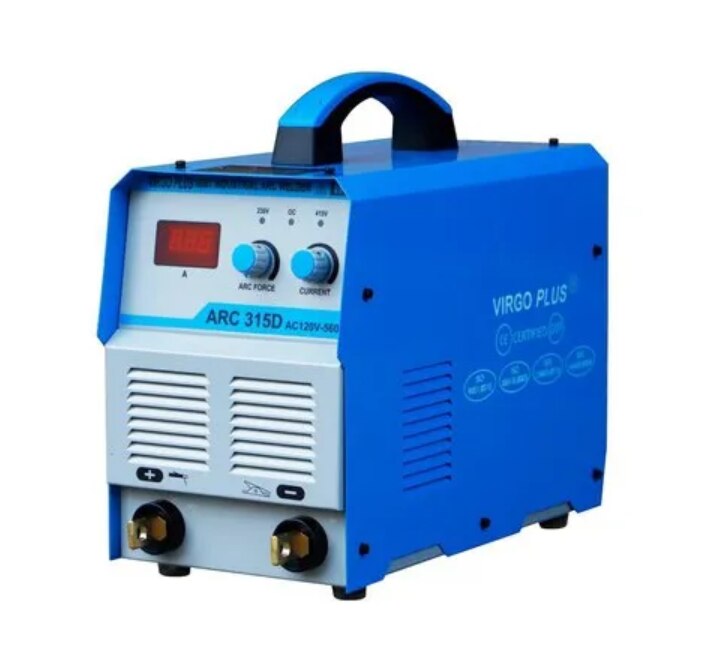 | Welding Machine Minimum Order Quantity 2 Piece Phase Single Welding Type Arc Brand Esab Model 315 AP Insulation A Compatible Rods 8 mm Established in the year 2020... View product → |
 | Mini Crane Capacity 5 Ton Max Height 10 Feet Span 20 m AMC/After Sales Service Provided Power Source Electric Hoist Travelling Speed 0-5 m/min Established in... View product → |
 | Cnc Plasma Pipe & Profile Cutting Machines Portable Cnc Plasma Cutting Machine Minimum Order Quantity 2 Piece Cutting Thickness More Than 30 mm Automation Grade Fully-automatic Power 1kv Voltage 415 V Material Stainless Steel... View product → |
 | Inverter Submerged Arc Series Welder Inverter Submerged Arc Series Welder Output Current 200 Amp Phase 3 Phase Automation Grade Automatic Power Source Electric Usage Welding Material MS Model Number Virgo Plus Established... View product → |