
The right supplier must prove more than a torch’s maximum amperage or a machine’s advertised cutting thickness. You will be able to compare process fit, production specifications, site requirements, cut quality, service obligations, and total ownership cost before signing a purchase order.
Key takeaways
- Use production thickness, not severance thickness, to size the machine.
- Request charts for your grade, amperage, gas and cutting speed.
- Confirm electrical supply, gas, extraction and floor space before ordering.
- Make suppliers prove cut quality through a written acceptance test.
Match the Cutting Process to Your Actual Workload
Choose the process from your daily mix of material, thickness, part size and hours, not from the machine’s maximum cutting thickness. A plasma cutting machine supplier should provide separate charts for production, maximum-quality and severance thickness at your material grade, amperage, gas and cutting speed.
Severance means separating the plate; it does not promise a usable edge.
| Process | Best fit | Wrong choice or required configuration |
|---|---|---|
| Plasma | Nested mild steel, stainless steel or aluminium sheet and plate; high daily throughput | Poor for ultra-fine details unless the torch, CNC and consumables support them |
| Oxy-fuel | Thick mild steel plate and long straight cuts | Wrong for stainless steel and aluminium; slow on thin sheet |
| Laser | Thin sheet, small holes and tight tolerances | Costly for heavy plate, reflective aluminium or dirty surfaces |
| Mechanical sawing | Cut-to-length bar, tube and simple profiles | Inefficient for nested shapes and internal features |
For an industrial plasma cutting machine, specify table travel, torch type, piercing capacity and duty cycle around your real shift pattern. Thin sheet, small holes and visible edges need controlled lead-ins and lead-outs; ask the supplier to cut your CAD/CAM files, not only prepared samples. A general straight cut proves little.
Have a stainless steel cutting machine supplier demonstrate hole diameter, circularity, taper and entry marks on your grade and thickness before you select the configuration. Loss of arc transfer at an edge can turn an acceptable nest into scrap.
Turn Advertised Specifications into Production Requirements
Treat maximum cutting thickness as a warning, not a buying number. It usually means severance thickness: the torch can separate the plate, but the edge may be tapered, rough, or unusable. Request separate cut charts for recommended production thickness, maximum-quality thickness, and severance thickness at your material grade, amperage, gas, and cutting speed.
Ask the supplier to state these production requirements in writing:
- Piercing capacity for the material and thickness you actually pierce, not only the final cutting limit. Confirm pierce time, pierce height, and the permitted number of pierces per hour.
- Positional accuracy and repeatability with the stated material thickness, feature size, machine condition, and inspection method. “±0.5 mm accuracy” means little without those conditions.
- Cut speed at the required thickness, plus corner-speed control. A high straight-line speed does not prove fast nested-part production.
- Edge quality against ISO 9013, including perpendicularity or angularity, mean roughness, and dimensional tolerance. Test small holes for diameter, circularity, taper, entry marks, and exit marks on your steel, stainless steel, or aluminium.
| Specification | What it reveals | Demand from the supplier |
|---|---|---|
| Maximum-quality thickness | Usable edge and tolerance | A sample and cut chart |
| Severance thickness | Separation only | Do not count it as production capacity |
| Consumable life | Running cost under conditions | Cost per metre or part at a defined pierce schedule |
| CNC features | Usable throughput | Nesting, kerf compensation, lead control, remnant handling, and interrupted-job recovery |
A machine that cuts straight lines well can still produce poor holes, expensive consumable wear, or slow output when its software requires manual code editing.
Check Power, Gas, Extraction, and Floor-Space Readiness
Confirm the facility before you sign for the table. A 415 V plasma cutting machine that does not match your supply, air system, extraction capacity, or available floor area will produce downtime before it produces parts.
1. Verify the complete electrical load, not only the plasma power source. Record nominal voltage, frequency, three-phase power requirements, maximum input current, short-circuit rating, protective breaker size, earthing arrangement, and generator compatibility for the CNC, chiller, compressor, and extraction system. Have an electrician confirm cable sizes and isolation points.
2. Put compressed air quality in the purchase specification. State inlet pressure, flow rate, filtration stages, dryer type, and the required ISO 8573-1 air-quality class. Water, oil aerosol, and dust destabilise the arc and consume electrodes and nozzles quickly; “shop air” is not a usable specification.
3. Design plasma fume extraction around the table’s cutting area, duct route, airflow, spark control, and filter service access. Include guarding, door interlocks, torch collision protection, emergency stops, and fire-control provisions. An installer should not be left to discover these omissions.
4. Mark the machine footprint before ordering. Reserve space for plate loading, unloading, operator access, control cabinets, gas and air connections, maintenance, and safe movement around the table. Check ceiling height and the route for delivering full-size plate.
Obtain a written utility drawing from the supplier, then have your electrician, compressor technician, and safety representative approve it before delivery. That check prevents an expensive machine from becoming an unusable installation.
Use a Live Demonstration and Written Acceptance Test
Write acceptance criteria before ordering, then use a plasma cutting machine demo on your own material and parts. Define measurable pass/fail limits for cut quality, dimensional repeatability, piercing, hole cutting accuracy, consumable use, extraction, software functions, operator training, spare-parts availability, and remote and on-site response times. This prevents a dispute over “high precision” after delivery.
1. Cut your normal mild-steel, stainless-steel, or aluminium grades at the intended thickness, amperage, gas, and production speed. Inspect perpendicularity, angularity, roughness, dross, bevel, and dimensional tolerance against the relevant ISO 9013 cut quality class. Request separate results for recommended production, maximum-quality, and severance thickness.
2. Test small holes, not only straight edges. Record diameter, circularity, taper, entry and exit marks, and the minimum hole-to-thickness ratio on your material. A clean sample plate proves little if your parts contain demanding holes.
3. Run a repeatability test on the complete table. Cut repeated features and diagonals, then check gantry squareness, backlash, rail condition, slat wear, vibration, and thermal drift. The plasma source specification cannot reveal these mechanical errors.
4. Make the operator run the CNC plasma cutting software through mixed-size nesting, kerf compensation, lead-ins, lead-outs, pierce delays, corner-speed control, remnant handling, and recovery after an interrupted job. Reject a system that needs manual code editing for routine work.
5. Attach inspection records, consumable counts, extraction readings, training sign-off, spare-parts stock, and service response times to the purchase contract. Accept the machine only when every stated limit passes.
Compare Supplier Capability and Total Ownership Cost
Compare suppliers on delivered production cost, not the machine quotation alone. Ask each industrial machinery supplier for a three-year cost sheet covering consumables, service visits, downtime, extraction, water or filter maintenance, and replacement parts.
| Compare | Ask for evidence | Cost consequence |
|---|---|---|
| Consumables | Prices and lead times for electrodes, nozzles, shields, swirl rings and torch caps | Calculate plasma consumables cost per metre or part, using your pierce count, plate thickness, gas and cutting speed |
| Spares | Availability and prices for height sensors, drive components and control-system parts | Proprietary items, minimum orders and import delays increase downtime |
| Support | Response time, technician location, commissioning scope, training and preventive maintenance schedule | Local plasma cutting machine service support reduces diagnosis and production delays |
| Safety and extraction | Written scope for guarding, interlocks, torch collision protection, fire control, and downdraft airflow or water level | Filter replacement, contaminated water, sludge disposal and fire controls become operating costs |
Require separate pricing for production thickness, maximum-quality thickness and severance thickness at your material grade, amperage, gas and speed. A low purchase price proves little if the “maximum” setting produces unusable edges.
RELIABLE IMPEX belongs on your comparison list only after it provides the same cost and support evidence as competing suppliers. Have every bidder price a sample schedule: daily metres, pierces per part, operating hours, consumable replacements and annual preventive maintenance. Then compare cost per accepted part, not cost per electrode or nozzle.
Related product
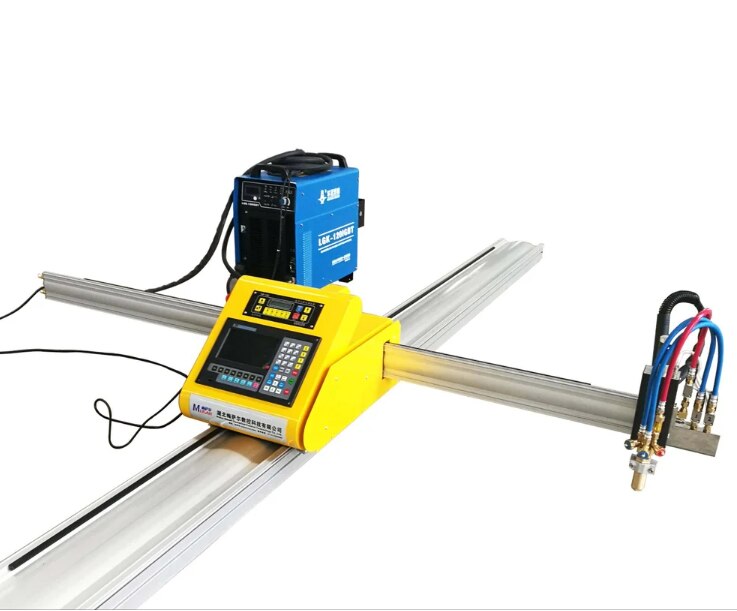 | Cnc Plasma Pipe & Profile Cutting Machines Portable Cnc Plasma Cutting Machine Minimum Order Quantity 2 Piece Cutting Thickness More Than 30 mm Automation Grade Fully-automatic Power 1kv Voltage 415 V Material Stainless Steel... View product → |
Frequently asked questions
How should you match a plasma cutter to your workload?
Base the choice on your daily material grades, thicknesses, part sizes and operating hours. Compare production, maximum-quality and severance thickness charts rather than relying on maximum thickness alone.
Which site requirements must you check before buying?
Confirm the machine’s electrical load, compressed-air or gas requirements, fume extraction, ventilation, slab capacity, access route and required floor space.
What should a live plasma cutting demonstration prove?
Ask the supplier to cut your material at representative thicknesses and speeds, then inspect edge squareness, dross, bevel, pierce quality, hole accuracy and cycle time.
How do you compare the total cost of plasma cutting machines?
Add purchase price to power, gases, consumables, extraction, maintenance, software, operator training, downtime and installation costs. Compare these expenses over the machine’s expected working life.