
An LDPE sheet can protect a concrete floor, line a fabricated cover, separate damp materials, or serve as a packaging liner, but the wrong thickness, resin formulation, or joining method can make it fail quickly. By the end, you will be able to match the sheet to its load, exposure, dimensions, installation method, and documentation requirements before requesting a quotation.
Key takeaways
- Choose LDPE for flexible, weldable moisture protection—not structural load-bearing.
- Specify thickness, sheet width, temperature, sunlight, chemicals, and service duration.
- Compare LDPE with HDPE, PVC, and geomembranes before approving the material.
- Confirm tolerances, batch details, welding method, and installation instructions with the manufacturer.
Where LDPE sheets earn their place in a project
Choose LDPE sheet when you need a flexible, weldable, moisture-resistant layer rather than a rigid structural panel or a certified permanent liner. LDPE sheet applications suit short- to medium-term protection, packaging, agricultural use, and fabricated components where low weight and easy handling matter.
| Job | Performance required | Check before approval |
|---|---|---|
| Temporary ground protection | Tear resistance, puncture resistance, non-slip surface, and enough thickness for foot traffic or light equipment | Abrasion, load, folding, and anchoring |
| Material covers | Water resistance, flexible handling, and UV stability during outdoor storage | UV package, seam design, and wind resistance |
| Moisture barriers | Low water-vapour transmission and continuous coverage | Transmission rate, test method, and seam integrity |
| Packaging liners | Moisture protection, heat-sealable surfaces, and clean polymer composition | Oxygen, aroma, and solvent transmission; LDPE is not a high barrier to these |
| Agricultural covers | Flexibility, sunlight resistance, and resistance to tearing during installation | UV stabilisation and declared service life |
| Fabrication liners and chutes | Impact resistance, low friction, chemical compatibility, and weldability | Temperature range, surface finish, and welding window |
| Construction protection | Resistance to dust, wet concrete, paint, and handling damage | Contact with hot surfaces, sharp edges, and fire exposure |
For water tanks, guards, covers, or soil-contact work, request density, tensile strength, elongation, impact data, thickness tolerance, colour, and UV formulation. Drinking-water service needs NSF/ANSI/CAN 61 or the applicable national certification, not merely a food-contact claim. LDPE softens, melts, and drips in fire, so require a named fire classification when that hazard exists.
How to specify thickness, width, and exposure conditions
Choose LDPE sheet thickness from the load, abrasion, folding, temperature, and puncture risk—not from thickness alone. A thin sheet can work as a dust cover, while a thicker sheet can still fail when dragged over sharp aggregate or repeatedly folded at low temperature.
Specify sheet width and roll length to reduce seams, lifting, and waste; confirm that the width fits your handling and welding equipment.
Ask the manufacturer to state:
- Thickness tolerance, density, tensile strength, elongation, impact performance, surface finish, colour, and forming or welding temperature window.
- Puncture resistance and stress-crack resistance when the sheet will contact soil, rubble, pallets, or sharp edges.
- UV-stabilized LDPE for sunlight exposure, with a stated outdoor service basis. Black colour alone does not prove UV durability.
- The resin grade: LDPE, LLDPE, and HDPE are not interchangeable for water containment. Request seam peel and shear strength, oxidation-induction performance, carbon-black dispersion, and dimensional stability for liner work.
- Transmission-rate data and its test method for packaging. Extra thickness does not automatically provide an oxygen, aroma, or solvent barrier.
- Food-contact documentation identifying the formulation and use conditions, including applicable 21 CFR 177.1520 limits where relevant.
| Application | Dimension and performance priority | Exposure decision |
|---|---|---|
| Temporary ground protection | Wider sheets, higher puncture resistance, manageable folding | Replace after abrasion or damage |
| Agricultural water liner | Controlled thickness, welded seams, dimensional stability | Select a liner grade, not generic LDPE |
| Outdoor cover | Width that limits seams; UV-stabilized formulation | Demand a defined service basis |
| Tank or chute liner | Thickness plus impact, tensile, elongation, and weldability | Check chemical and temperature compatibility |
When LDPE is the right material beside other plastics
Choose LDPE for a flexible cover, moisture barrier, or temporary liner exposed to moderate handling, where easy folding matters more than high stiffness or long-term structural performance. Specify UV stabilisation for sunlight; natural or lightly pigmented LDPE can embrittle, while black carbon-black grades usually last longer. Colour alone does not prove an outdoor service life.
| Material | Advantage or risk compared with LDPE | Choose it when |
|---|---|---|
| LDPE versus HDPE | LDPE is softer and more flexible; HDPE is stiffer, more puncture-resistant, and generally better for demanding containment | Use HDPE for rigid protection, harsher handling, or engineered liners |
| LDPE versus PVC | LDPE avoids plasticiser migration concerns and stays flexible without fabric reinforcement; PVC offers stronger coated-fabric options but can stiffen in cold conditions | Use PVC when welding, coating, or a specified PVC construction suits the duty |
| Polypropylene sheet | PP is stiffer and handles higher temperatures, but it offers less flexibility and cold-impact tolerance | Use PP for rigid separators, process surfaces, or warmer service |
| Tarpaulin comparison | Tarpaulin usually has woven reinforcement, eyelets, and coated layers; it resists handling but is not automatically a leak-tight liner | Use tarpaulin for covers, not buried or sealed containment unless its construction is certified |
| Certified geomembrane | Engineered LDPE, LLDPE, or HDPE geomembranes require documented seams, puncture resistance, stress-crack resistance, oxidation-induction performance, and dimensional stability | Use one for permanent water, soil, or waste containment |
For drinking water, require NSF/ANSI/CAN 61 or the applicable national scheme, not merely a food-contact declaration. For oxygen, aroma, or solvent barriers, LDPE is weaker than EVOH, polyamide, or metallised structures; specify transmission rates and test methods. Reject generic “fire retardant” claims without a named classification.
How to distinguish the ordered product and install it correctly
LDPE film versus sheet is mainly a product-form distinction: film is thin and flexible for wrapping or lining light-duty packaging, while sheet is thicker and intended to resist handling, impact, folding, or puncture. Shrink film is a heat-shrink product, not an ordinary LDPE cover; heating makes it contract around a load.
| Option | What it means | When it applies |
|---|---|---|
| LDPE sheet | Flat LDPE material supplied for fabrication or protection | Covers, guards, chutes, temporary protection, and light-duty liners |
| Plastic liner | A use description, not a guaranteed polymer or grade | Tanks, bins, ponds, trays, or soil barriers; confirm polymer and thickness |
| Geomembrane | An engineered containment product with documented seam and durability performance | Permanent water, waste, or soil-contact containment |
| Shrink film | Film formulated to contract under controlled heat | Bundling and packaging loads |
Install the selected material as follows:
- Cut on a clean, flat surface with a sharp knife; leave allowance for seams, folds, and thermal movement, and round inside corners to prevent tearing.
- Join compatible LDPE grades by heat welding LDPE within the manufacturer’s stated temperature, pressure, and speed window. Make trial seams, then check peel and visual continuity; do not treat adhesive tape as a permanent containment joint.
- Anchor liners with clamping battens and broad washers, or place edges in a continuous anchor trench. Remove stones, burrs, and sharp projections before laying the material.
- For geomembranes, record seam peel and shear results and protect finished seams from traffic, dragging, and puncture.
What to ask an LDPE sheet manufacturer before approval
A general-purpose sheet can look flawless and still fail as a tank liner, chute, guard, or fabricated cover. Before approval, ask for a written grade specification covering density, tensile strength, elongation, impact performance, thickness tolerance, surface finish, colour, UV package, and the forming or welding temperature window.
| Question | Why it matters | Hold approval when |
|---|---|---|
| Resin: virgin or recycled? | Recycled content can change strength, odour, colour, and drinking-water suitability. | The percentage, source, and additive history are undisclosed. |
| What is the batch identification? | It links rolls to resin, production date, and test records. | The label has only a product name and dimensions. |
| Which test method supports each value? | A number without ASTM or ISO method cannot be compared reliably. | No method, sample direction, or acceptance limit is stated. |
| What does the packaging protect? | Dust, moisture, sun, crushed cores, and damaged edges create installation defects. | Rolls arrive unsealed, unlabelled, or without quantity and batch records. |
Ask for a retained sample and inspect thickness at the centre, edges, and across several points; a single reading can hide thin zones. For packaging liners, request oxygen, aroma, and solvent transmission data with the test method rather than assuming extra thickness creates a sufficient barrier.
If the sheet will touch drinking water, request NSF/ANSI/CAN 61 or the applicable national certificate, plus additive and pigment traceability. For fire-sensitive work, demand a stated UL 94 or building reaction-to-fire classification. Ask RELIABLE IMPEX for these records before treating a quotation as technical approval.
Related product
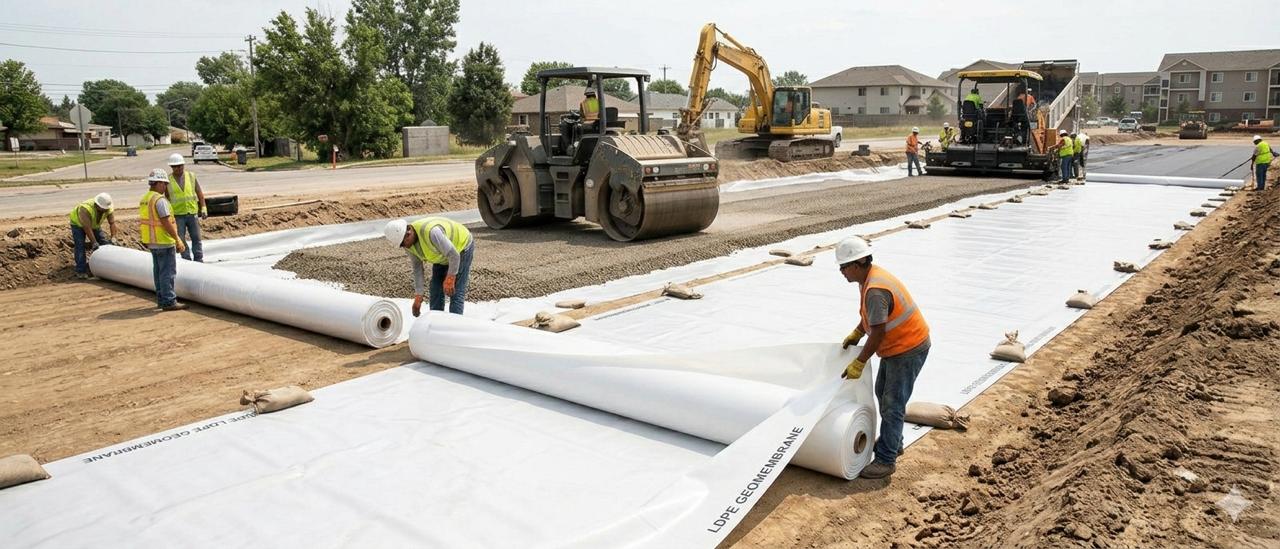 | LDPE SHEET LDPE SHEET MANUFACTURER View product → |
Frequently asked questions
Where are LDPE sheets used in projects?
LDPE sheets suit short- to medium-term moisture barriers, packaging, agricultural covers, surface protection, fabricated parts, and applications requiring low weight and flexibility.
How do you specify an LDPE sheet order?
State the required thickness and width, then document temperature range, sunlight exposure, chemical contact, mechanical loads, service duration, colour, surface finish, and joining method.
When should you choose LDPE instead of another plastic?
Choose LDPE when flexibility, weldability, low weight, and moisture resistance matter more than rigidity, high-temperature performance, puncture resistance, or certified long-term lining service.
What should you ask an LDPE sheet manufacturer before approval?
Ask for thickness and width tolerances, material grade, batch identification, test data, roll or sheet dimensions, storage guidance, welding recommendations, and suitability for your exposure conditions.


