A low machine price does not tell you whether the equipment will fit your process, arrive ready to run, or remain serviceable after the warranty starts. Use the checks below to verify the dealer, test the recommendation, compare the full cost, and define the evidence you need before releasing a purchase order.
Key takeaways
- Match the dealer’s legal name, GSTIN, address, and machine serial number.
- Describe your material, output, tolerances, and working conditions before comparing machines.
- Calculate installation, tooling, power, freight, training, maintenance, and downtime costs.
- Require documented testing, acceptance criteria, warranty terms, and spare-parts support.
Can You Verify the Dealer and the Machine’s Identity?
A traceable purchase starts with a dealer whose legal business identity you can verify before money changes hands. Use industrial equipment dealer verification as a pre-quotation check, not after a dispute begins.
1. Ask for the registered business name, GSTIN, GST invoice, physical address, and a named service contact. Match the GSTIN and legal name across the quotation, invoice, bank account, and warranty paperwork.
2. Request the machine’s legal manufacturer, exact model, revision, year of manufacture, and serial number. Compare these details with the machine nameplate, manufacturer records, quotation, and delivery documents.
3. Confirm authorised distributor status directly with the manufacturer when the dealer claims it. Ask whether the authorisation covers your country, model range, warranty support, genuine parts, and commissioning.
4. For used equipment, require the chain of ownership, previous operating location, service history, hours or cycle records, and any finance or lien release. A missing ownership trail makes warranty claims and stolen-equipment checks harder.
5. Demand the manufacturer’s declaration of conformity, technical file index or operating documentation, risk assessment, and traceable serial records where applicable. A trader’s statement that equipment is “manufactured to” ISO 12100, ISO 13849-1, or another standard is not equivalent to those documents.
Check the serial number before payment and again at delivery. If the dealer will not identify the manufacturer, machine, ownership history, or accountable service contact in writing, treat the offer as untraceable regardless of its price.
Does the Dealer Understand Your Application?
The dealer understands your application only when the recommendation rests on measured operating conditions, not a headline number. Provide technical application data for machine sizing: material grade and thickness, workpiece dimensions, production volume, accuracy, available space, floor conditions, power supply, lifting height, attachment, fluid, or packaging format.
Send these details before requesting a quotation:
- Required output per hour, batch size, operating hours per shift, and duty cycle
- Maximum load or dimension, plus the normal load or dimension
- Required tolerance, repeatability, speed, pressure, flow, temperature, or lifting reach
- Ambient temperature, dust, moisture, altitude, and ventilation
- Supply voltage, phase, frequency, earthing arrangement, and available current
- Compressed-air, gas, cooling-water, drainage, and waste-disposal connections
Ask the dealer to state the test material or fluid, ambient limits, tooling, attachment, counterweight, and configuration behind every performance figure. For electrical compatibility, request confirmation of motor starting current, control-panel rating, harmonic or regenerative loads, and compliance with IEC 60204-1 or the applicable local rule.
| Claim | What it means | What to verify |
|---|---|---|
| Maximum capacity | The limit reached under stated conditions | Load chart, reach, attachment, material, and test conditions |
| Continuous capacity | The output the machine can sustain without overheating, instability, or unacceptable quality | Rated duty cycle, allowable operating point, and cooling assumptions |
| Headline specification | A comparison figure without operating context | Demonstration using your material, tooling, and production target |
If the dealer cannot explain those differences or refuses an application trial, the machine is not yet proven to fit your job.
What Will the Equipment Cost Before It Produces Anything?
Compare quotations on landed cost, not the machine price. The landed cost includes freight, insurance, unloading, taxes, installation and commissioning, electrical work, foundation preparation, and operator training.
Then calculate total cost of ownership over a defined period, including energy at the stated duty cycle, compressed air or shielding gas, tooling, electrodes, wire, nozzles, filters, lubricants, calibration, software fees, planned downtime, and process-waste disposal.
| Quote line | What to confirm | Cost if omitted |
|---|---|---|
| Machine | Exact model, revision, year, serial number, and stated capacity | Wrong specification or an untraceable asset |
| Logistics | Freight, insurance, unloading, rigging, storage, and taxes | Unbudgeted delivery charges |
| Installation and commissioning | Mechanical assembly, alignment, utilities connection, startup tests, and who pays | A machine that arrives but cannot produce |
| Operating inputs | Energy, air or gas flow, consumables, wear parts, service intervals, and software | A low purchase price with expensive production |
| Warranty | Labour, travel, parts, exclusions, and response time | Repairs charged to you |
Ask the dealer to mark every line as included, excluded, or optional. Separate commissioning from installation, alignment, operator training, production proving, and performance acceptance; they are different deliverables. For acceptance, specify measurable output, accuracy or repeatability, permitted reject rate, utility consumption, safety-function tests, documents handed over, and the remedy if the machine misses them.
Check electrical compatibility against the site: voltage, phase, frequency, earthing, short-circuit current, motor starting current, and control-panel rating. For hydraulic or pneumatic equipment, require filtration, fluid specification, flushing, hose compatibility, and commissioning-test details; contamination can destroy pumps, valves, and actuators before the warranty debate ends.
What Evidence Should You Require Before Acceptance?
Do not sign acceptance on the machine’s appearance or a generic conformity label. Require a dossier tied to the delivered serial number, exact model and revision, year of manufacture, and legal manufacturer.
| Document or evidence | What it must contain | Why it matters |
|---|---|---|
| Manufacturer documentation | Declaration of conformity or incorporation, technical specifications, manuals, parts lists, and approved operating limits | A trader’s “manufactured to” statement does not identify the responsible manufacturer or the machine’s limits. |
| Safety file | Risk assessment and risk-reduction record under ISO 12100; guard, interlock, emergency-stop, and safety-circuit drawings; safety-function validation and performance-level evidence under ISO 13849-1 | Missing architecture can hide a safety function that depends on an untested relay, sensor, or software setting. |
| Electrical file | IEC 60204-1 wiring diagrams, control-panel layout, component ratings, motor data, earthing results, insulation tests, and control-software or parameter backups | An undocumented change can make fault-finding slow and replacement components incompatible. |
| Maintenance file | Preventive-maintenance schedule, lubrication chart, torque values, wear limits, troubleshooting codes, critical spares list, and commissioning record | Operators otherwise guess at service intervals and lose time waiting for proprietary parts. |
| Performance file | Signed acceptance protocol covering capacity, accuracy or repeatability, reject rate, cycle time, utilities, safety-function tests, and remedies for missed results | “Maximum capacity” does not prove recommended continuous output. |
For used equipment, add operating-hour evidence, alarm history, maintenance and failure records, hydraulic-oil or lubricant analysis where relevant, dimensional checks, insulation testing, structural inspection, and a loaded demonstration using your material. Request calibration certificates, material certificates, pressure tests, welding records, and safety-component traceability for regulated applications.
Can the Dealer Keep the Machine Running After Delivery?
Ask the dealer to prove after-sales service before you place the order. A long warranty does not help if a proprietary drive, controller, seal kit, or sensor leaves your machine idle for three weeks.
1. Request a written spare-parts stock list. It should identify failure-critical items held locally, replenishment lead times, genuine wear parts, and approved alternatives. For a band saw or welder, include blades, nozzles, lenses, electrodes, contact tips, sensors, and fuses.
2. Get the service response time in writing: who receives a breakdown call, when a technician returns the call, and when an on-site visit begins. Ask for the escalation path from dealer technician to manufacturer specialist, including names, phone numbers, and response targets.
3. Confirm what you receive for software access. The order should state ownership or access to software licenses, passwords, PLC and HMI programs, parameter backups, electrical drawings, recipes, diagnostic tools, cybersecurity updates, and restoration support. Without these, replacing a controller or modifying a recipe can require the original integrator.
4. Ask for commissioning, operator training, and preventive maintenance procedures, with checklists and intervals. Then request two customer references using comparable machines, production duty, and controls; ask how long faults took to resolve, not whether the equipment is “good.”
Whether you are assessing RELIABLE IMPEX or another supplier, make these answers part of the quotation. Vague promises expose you to downtime that the machine price never shows.
Related products
 | Band Saw Machine Metal Cutting Band Saw Machines Minimum Order Quantity 2 Piece Usage/Application Metal Cutting Material Steel Automation Grade Manual Cutting Capacity 200 mm (Round) and 220 x 200... View product → |
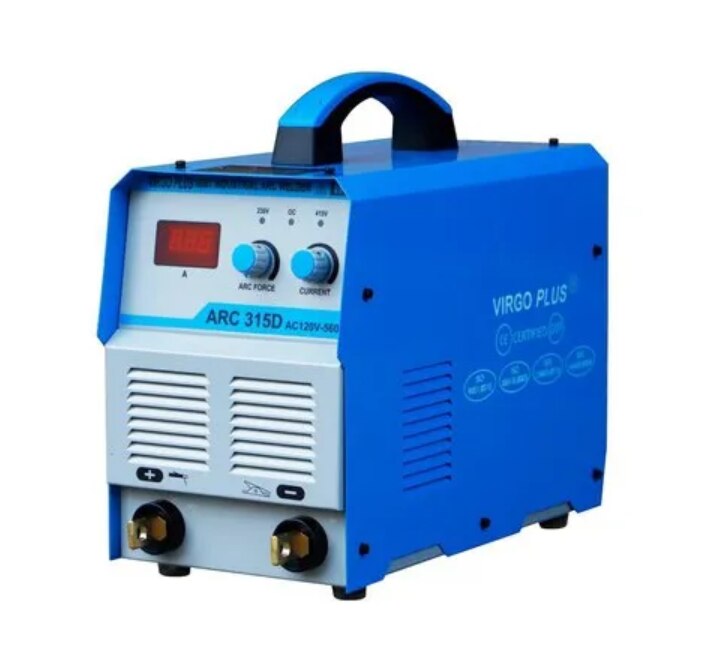 | Welding Machine Minimum Order Quantity 2 Piece Phase Single Welding Type Arc Brand Esab Model 315 AP Insulation A Compatible Rods 8 mm Established in the year 2020... View product → |
Frequently asked questions
How can you verify an industrial equipment dealer and machine identity?
Check the dealer’s legal name, GSTIN, registered address, and contact details against official business records. Match the quotation and invoice to the machine’s manufacturer, model, serial number, country of origin, and supplied accessories.
What application details should you give an industrial equipment dealer?
Provide the material type and dimensions, required output, accuracy or tolerance, operating hours, available power, workspace, safety constraints, and expected duty cycle. Use these details to compare machine capacity with your actual process.
What costs should you include before buying industrial equipment?
Add the machine price to freight, unloading, installation, commissioning, tooling, dies or consumables, electrical work, operator training, taxes, preventive maintenance, spare parts, and expected downtime during setup.
What evidence should you require before accepting the machine?
Agree on a written acceptance test covering output, accuracy, safety functions, included components, and defect correction. Record test results, photographs, serial numbers, manuals, warranty documents, and operator training at handover.
What after-sales support should an industrial equipment dealer provide?
Confirm response times, service coverage, warranty exclusions, preventive-maintenance intervals, spare-parts availability, remote support, technician access, and the process for reporting and resolving breakdowns.
Related products
 | Inverter Submerged Arc Series Welder Inverter Submerged Arc Series Welder Output Current 200 Amp Phase 3 Phase Automation Grade Automatic Power Source Electric Usage Welding Material MS Model Number Virgo Plus Established... View product → |
 | Mini Crane Capacity 5 Ton Max Height 10 Feet Span 20 m AMC/After Sales Service Provided Power Source Electric Hoist Travelling Speed 0-5 m/min Established in... View product → |
 | Power Floater roduct Details: Engine Power 35 Hp Material Power Trowel Color Blue And Black Automation Grade Semi Automatic Usage/Application For Construction Is... View product → |
 | Walk Behind Roller Minimum Order Quantity 5 Piece Engine Power 5 HP Drive type Manual Rolling Width 1675 mm, 1250 mm Max Roll Weight 330 Kg Approx. View product → |