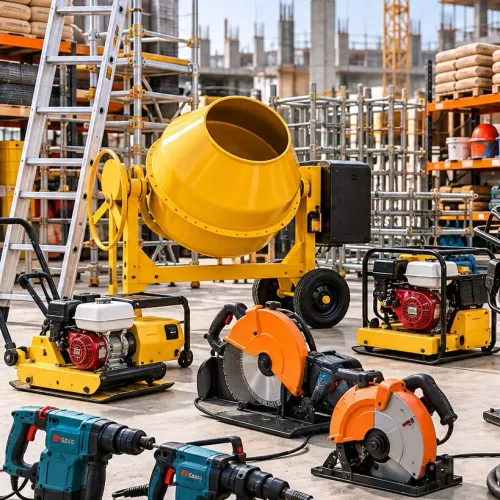
A low purchase price does not make construction equipment affordable if freight, setup, fuel, operators, repairs, and idle time consume the budget. You will be able to calculate the capacity you need, compare competing machine types, check whether equipment fits your site, and turn a quotation into a measurable ownership decision.
Key takeaways
- Calculate fuel, maintenance, downtime, transport, and finance costs per productive hour.
- Choose capacity from required output, not the machine’s lowest advertised price.
- Confirm site access, power supply, transport limits, and used-machine condition before purchase.
- Put safety documents, warranty coverage, testing, and acceptance terms in writing.
Calculate the Cost of Ownership Before Comparing Prices
A machine is genuinely affordable when its total cost of ownership per productive hour fits the job budget, not when its purchase price is lowest. Affordable construction machines earn their cost through reliable output.
1. Add the purchase price, freight to site, installation, operator training, financing, insurance, fuel or electricity, consumables, scheduled servicing, wear parts, and expected repairs. Subtract the realistic resale value at the end of your ownership period.
2. Estimate productive hours, not clock hours. Deduct setup, loading, cleaning, refuelling or charging, changeovers, operator breaks, and likely downtime. A concrete pump’s maximum cubic metres per hour is not its working output if batches arrive late or cleaning takes an hour each day.
3. Calculate construction equipment cost per hour with this formula: total ownership and operating cost minus resale value, divided by productive hours. Include operator time and transport between sites; both can outweigh a small purchase-price difference.
4. Price downtime separately. Check local parts availability, service response, diagnostic-tool requirements, and whether filters, tyres, tracks, hydraulic components, or controllers match your existing fleet. A discounted machine that waits weeks for an imported part is not cheap.
5. Test the machine’s claimed capacity against your work. Require the exact excavator lift chart for its boom, attachment, reach, and undercarriage position; maximum digging force is not usable lifting capacity.
6. For electric equipment, cost usable work-cycle energy and charging infrastructure, not nominal battery capacity. Then compare machine operating cost and expected output with competing machines or labour-based methods.
Match Machine Capacity to the Work You Must Complete
Treat construction machine capacity as usable output, not the largest number in a brochure. Divide the project quantity by the productive hours available in the working window, then check whether the site allows that output.
A machine that finishes the quantity only if it runs continuously has no allowance for repositioning, loading, charging, refuelling, or delays.
Turn each work package into a required output:
- Compaction: calculate compacted area, layer thickness, specified passes, drum width, overlap, and travel speed. Compare the result with compaction productivity, not the roller’s engine power. A narrow access route can make a smaller walk-behind roller faster overall.
- Concrete: divide the slab’s concrete finishing area by the finishing window. Match the power trowel’s working width and number of operators to that hourly target; a machine that arrives after the concrete begins setting is undersized.
- Lifting: define the load including the attachment and rigging, then record lift height and working radius. Use the exact lifting capacity chart for the excavator or crane configuration, including boom, counterweight, outrigger position, and ground support. Never substitute a chart from a similar model.
- Excavation or cutting: calculate required volume or cut length from depth, material hardness, attachment size, and cycle time. A larger attachment is not an advantage if the site cannot support its weight or provide enough hydraulic flow.
Finally, test the capacity against access, slope, ground bearing, overhead clearance, power supply, and weather limits. Electric equipment also needs usable work-cycle energy and charging time, not merely its battery’s nominal capacity.
Compare Lower-Cost Machine Options by Productive Output
A cheaper machine wins when it delivers more finished work per productive hour after fuel, operator time, wear parts, servicing, transport and downtime. Compare the cost of completed square metres, cuts, lifts or cubic metres—not the purchase price. A slow machine loses its advantage as labour and project delay accumulate.
| Option | Lower-cost choice wins when | It loses when |
|---|---|---|
| Walk-behind roller vs ride-on roller | Narrow access, short runs or small repair areas make transport and operator costs low. | Larger areas demand continuous compaction; the ride-on roller covers more square metres per hour and reduces labour hours. |
| Power trowel vs hand finishing | The slab is large and the finishing window is short; one operator achieves consistent coverage before the concrete sets. | Small, congested or heavily edged slabs require frequent repositioning, where hand finishing avoids setup time. |
| Mini crane vs manual labour | The lift is repetitive, the load is heavy, or stairs and distance make carrying slow and hazardous. | A few light lifts need more rigging and setup time than the task itself. |
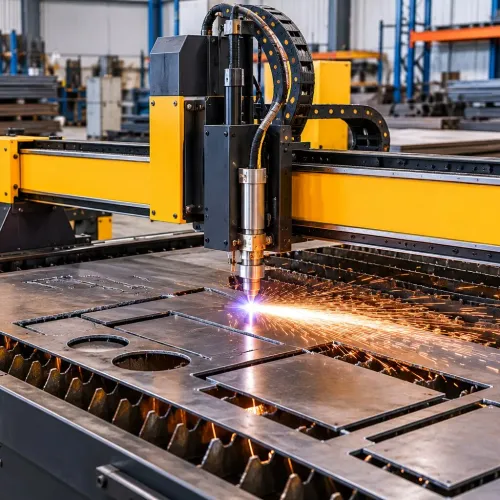
| Manual band saw vs CNC plasma cutting | You cut occasional straight profiles and setup time matters more than speed. | Repeated parts, thick batches or complex profiles make CNC plasma cutting faster and more repeatable. |
Price the machine with its actual shipping configuration, including permits and loading. Reject any saving that depends on removing guards, rollover protection or other required safety equipment. Then divide total hourly cost by verified productive output; the result exposes whether the bargain machine actually wins.
Check Site Fit, Power, Transport, and Used-Machine Condition
A machine that cannot clear the gate, reach the work face, or connect to available power is not affordable. Measure the narrowest access point, turning radius, slab edge clearance, overhead height, slope, ground bearing capacity, and space for loading or unloading before comparing models.
- Record machine width, height, length, operating weight, and required transport permits; obtain a delivered quote because machine transport cost can exceed the apparent saving on a used unit.
- Confirm the site voltage, phase, breaker capacity, earthing, cable length, fuel access, charging time, and generator capacity. Compare electric machines by usable work-cycle energy, not battery capacity; attachment load, temperature, travel, hydraulic demand, and battery age change runtime.
- Match the attachment’s auxiliary hydraulic flow, operating pressure, return-line back pressure, electrical controls, case drain, weight, and stability requirements. Pressure alone is not compatibility; insufficient auxiliary hydraulic flow can reduce output or overheat the circuit.
- Complete a used construction machinery inspection: cold start, blow-by, oil and coolant samples, hydraulic drift and relief pressure, final drives, articulation pins, slew-ring backlash, undercarriage wear, leaks, and electrical fault logs. Treat the hour meter as evidence, not proof.
- Test travel, alarms, operating temperatures, safety guards, and emergency stops, then record serial numbers and defects in the acceptance document. Include agreed repairs before payment.
Put Safety, Warranty, and Acceptance Terms Into the Purchase
Require the supplier to put safety controls, support obligations, and a machine acceptance test into the purchase contract—not into a verbal promise. For construction site safety India, demand functioning guards, emergency stops, alarms, brakes, lights, seat belts, fire extinguishers, earthing, and readable warning labels before delivery.
- State the construction machinery warranty period, covered parts, labour, travel, response time, and exclusions. Name the remedy for a failed covered component: repair, replacement, or refund.
- Define after-sales service by location, technician response time, spare-parts availability, preventive-maintenance schedule, and diagnostic support. Confirm that your workshop can use the required tools and manuals.
- Attach an acceptance form recording the machine serial number, engine number, cold-start behaviour, operating temperature, hydraulic functions, travel or loading performance, leaks, alarms, attachments, safety devices, manuals, and photographs.
- For used diesel equipment, record the emissions label, engine family, after-treatment system, and import history. Reject a machine whose emissions configuration cannot be registered or operated at the destination.
- Use the exact crane load chart for the supplied boom, jib, counterweight, outrigger position, radius, hoist arrangement, and ground condition. A similar model’s chart is not evidence of capacity.
- Set a defect deadline and hold back payment until the acceptance test passes. Specify who pays for transport, rectification, retesting, and downtime if it fails.
RELIABLE IMPEX can be compared on these written terms rather than on quoted price alone; the same checklist applies to any supplier.
Related products
 | Power Floater roduct Details: Engine Power 35 Hp Material Power Trowel Color Blue And Black Automation Grade Semi Automatic Usage/Application For Construction Is... View product → |
 | Roller Machine Product Details: Automation Grade Semi Automatic Engine Power 110 HP @ 2200 rpm Rolling Width 1250 mm, 1675 mm Warranty 18 Months Vibration Frequency... View product → |
Frequently asked questions
How do you calculate the cost of owning a construction machine?
Add purchase, finance, fuel, maintenance, repairs, transport, operator, and downtime costs, then divide by expected productive hours.
How do you match machine capacity to a construction job?
Define the required output, material, operating cycle, working space, and project schedule before selecting machine capacity.
How should you compare lower-cost construction machines?
Compare productive output per hour, energy use, labour needs, maintenance frequency, downtime risk, and total ownership cost.
What should you check before buying a used construction machine?
Inspect the engine, hydraulics, structure, controls, safety guards, service records, operating hours, and repair history.
Related products
 | Mini Crane Capacity 5 Ton Max Height 10 Feet Span 20 m AMC/After Sales Service Provided Power Source Electric Hoist Travelling Speed 0-5 m/min Established in... View product → |
 | Walk Behind Roller Minimum Order Quantity 5 Piece Engine Power 5 HP Drive type Manual Rolling Width 1675 mm, 1250 mm Max Roll Weight 330 Kg Approx. View product → |
 | Band Saw Machine Metal Cutting Band Saw Machines Minimum Order Quantity 2 Piece Usage/Application Metal Cutting Material Steel Automation Grade Manual Cutting Capacity 200 mm (Round) and 220 x 200... View product → |
 | Cnc Plasma Pipe & Profile Cutting Machines Portable Cnc Plasma Cutting Machine Minimum Order Quantity 2 Piece Cutting Thickness More Than 30 mm Automation Grade Fully-automatic Power 1kv Voltage 415 V Material Stainless Steel... View product → |