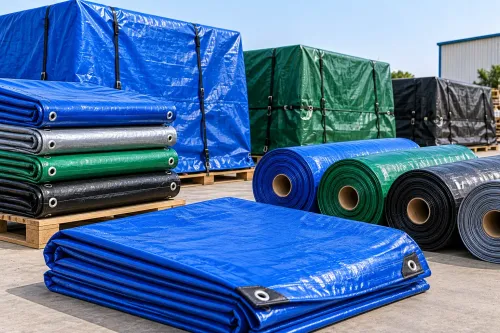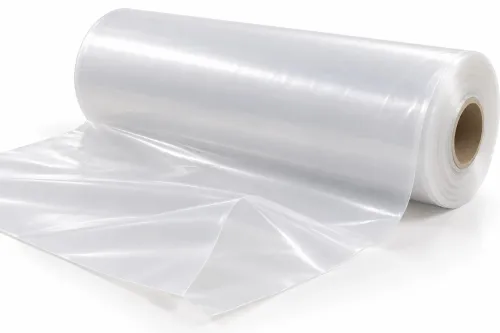

A low quoted price is not enough if one supplier is pricing nominal thickness while another is pricing usable material, or if their “LDPE sheet” contains a different polymer blend. By the end, you will have a specification, comparison method, supplier-question list, and receiving inspection process for a wholesale order.
Key takeaways
- Specify thickness, width, length, colour, grade, packaging, and delivery terms before requesting quotes.
- Match LDPE grade and polymer to the sheet’s temperature, strength, and handling requirements.
- Request lot numbers, test reports, invoices, and declarations instead of relying on catalogue claims.
- Calculate cost per usable square metre after trimming, defects, packaging, freight, and rejected material.
Build a Sheet Specification Before You Request Prices
A quote is comparable only when every supplier prices the same material and delivery format. Put the requirements in an LDPE sheet specification before requesting prices; “LDPE sheet, 500 microns” leaves too many cost-changing details open.
- State sheet thickness in microns or millimetres, the thickness tolerance, the measurement method, the sampling pattern, and the acceptance limit. ASTM D882 is the usual tensile method for thin sheet.
- Define usable width, overall width, cut-sheet length, roll length, width tolerance, edge trim, and dimensional tolerances. Do not let a supplier substitute nominal width for usable width.
- Name the base-polymer designation, density, melt mass-flow rate, applicable grade or compound specification, colour, surface finish, and virgin, reprocessed, or blended status. “LDPE” can conceal an LLDPE blend.
- For recycled content, require the declared percentage, source, contaminant controls, and lot-to-lot data for colour, odour, gel count, tensile elongation, weldability, and environmental stress-crack resistance.
- Set limits for gels, black specks, pinholes, and surface defects. Specify defect size, frequency, inspection lighting, and whether inspectors examine both sides.
- For fabricated parts, request tensile yield strength, tensile strength, and elongation separately in machine direction and transverse direction. Extrusion orientation can hide weakness behind one average result.
- Specify core diameter, maximum roll diameter and mass, winding direction, splice policy, pallet arrangement, and protection against telescoping, moisture, and contamination.
| Format | Define in the request | Why it affects comparison |
|---|---|---|
| Roll | Length, core, maximum diameter, mass, splices | Changes freight, handling, and installation labour |
| Cut sheet | Length, width, squareness, stacking and packing | Controls fit, waste, and unpacking time |
| Either | Tolerances and usable dimensions | Prevents nominal measurements from masking shortages |
Match Thickness, Grade, and Polymer to the Job
A suitable formulation matches the job’s load, exposure, joining method, and appearance requirements—not just the quoted thickness. Ask for the base-polymer designation, density, melt mass-flow rate, virgin or reprocessed status, additive package, and applicable grade or compound specification; “LDPE sheet” can conceal LLDPE or another blend.
- For temporary covering, floor protection, or damp-proof separation, select thickness and puncture performance for handling rather than appearance. Pond and water-containment sheets need verified tensile, elongation, weldability, and environmental stress-crack resistance.
- For packaging, liners, vacuum forming, or visible panels, set limits for gels, black specks, pinholes, and surface defects. Specify defect size, frequency, lighting, and whether both sides are inspected.
- Require actual thickness, width, and length tolerances, plus the thickness test method, sampling pattern, and acceptance limits. Nominal thickness alone can hide uneven material.
- Confirm additive compatibility before printing, coating, bonding, or welding. Slip agents, antiblock agents, pigments, calcium carbonate, and recycled fractions can alter friction, surface energy, elongation, density, and weld quality.
- For food contact, verify the exact formulation and contact conditions against 21 CFR 177.1520 in the United States or Regulation (EU) No. 10/2011 in the European Union, including migration limits and simulants.
Virgin LDPE usually gives the cleanest appearance, lowest odour, and most consistent welding. Recycled LDPE can vary more in colour, gels, tensile elongation, puncture resistance, odour, and batch consistency; demand its percentage, source, contaminant controls, and lot data. Blended LDPE fits cost-sensitive work only when those properties remain within your limits.
Do not confuse LDPE shrink film versus sheet: shrink film is engineered to contract under heat, while sheet is selected for stable coverage, separation, containment, or fabrication.
Demand Lot-Level Evidence, Not Catalogue Claims
Approve a supplier only when its evidence identifies the exact production lot, not merely the product family. A catalogue value describes what the sheet is supposed to be; a lot record shows what you will receive.
Request these records before approval:
- The technical data sheet: base-polymer designation, density, melt mass-flow rate, virgin or reprocessed status, additives, colour, and applicable grade or compound specification. “LDPE sheet” alone is insufficient because blends can include LLDPE.
- A certificate of analysis tied to the shipment’s batch number and production date, with measured thickness, density, melt mass-flow rate, resin identification, and agreed mechanical or surface results. Reject a certificate that lists nominal values without test methods.
- A dimensional report stating thickness, width, and length tolerances, the thickness-measurement method, sampling pattern, and acceptance limits.
- An environmental-stress-cracking report stating the ASTM D1693 condition, specimen geometry, applied stress, test environment, and failure-time results. “Chemical resistant” is not an ESCR qualification.
Compare the evidence this way:
| Evidence | Catalogue claim | Lot-level proof |
|---|---|---|
| Density and melt mass-flow rate | Typical value | Measured result for the batch number |
| Thickness and width | Nominal dimension | Sample pattern, test method, tolerance, and readings |
| Welding performance | Melt point or general guidance | Peel or joint-strength results and approved joining window |
For heat sealing or welding, obtain the supplier’s joining temperature, dwell time, pressure, and surface-preparation instructions. Compare those settings with melt mass-flow rate and peel data; resin blends, additives, oxidation, contamination, and extrusion history can change weld strength even when density looks similar.
Compare Wholesale Prices on Usable Material and Supply Risk
Compare delivered, usable material—not the number printed on the quote. Calculate cost per kilogram using the net sheet mass, excluding the cardboard core, pallet, and packaging. Calculate cost per square metre from usable width × usable roll length, then deduct stated edge trim, splice sections, and damaged or unusable material.
| Quote item | Supplier A | Supplier B | Fair comparison |
|---|---|---|---|
| Price basis | Per roll, ex works | Per kilogram, delivered | Convert both to delivered cost per kilogram and per square metre |
| Roll format | Width, length, core, mass | Width, length, core, mass | Price installation time, handling equipment, and transport space |
| Minimum order quantity | Kilograms or rolls | Kilograms or rolls | Calculate cash tied up and leftover stock |
| Lead time | Stock or made to order | Stock or made to order | Include production, dispatch, and transit days |
| Commercial terms | Freight, GST, payment, claims | Freight, GST, payment, claims | Compare the complete landed cost and financial exposure |
Roll format is a logistical specification. Record maximum roll diameter and mass, winding direction, pallet configuration, splice policy, edge trim, and protection against telescoping and contamination. A cheaper roll can cost more if it needs extra labour, cannot fit your dispenser, or arrives with contaminated edges.
Ask whether the quoted grade is virgin, reprocessed, or blended, and whether the same formulation is reserved for repeat orders. Request stock status, batch availability, replacement terms, and the supplier’s response if the lead time slips.
Whether you request pricing from RELIABLE IMPEX or another supplier, issue one identical schedule so every quote covers the same usable output and supply risk.
Related product
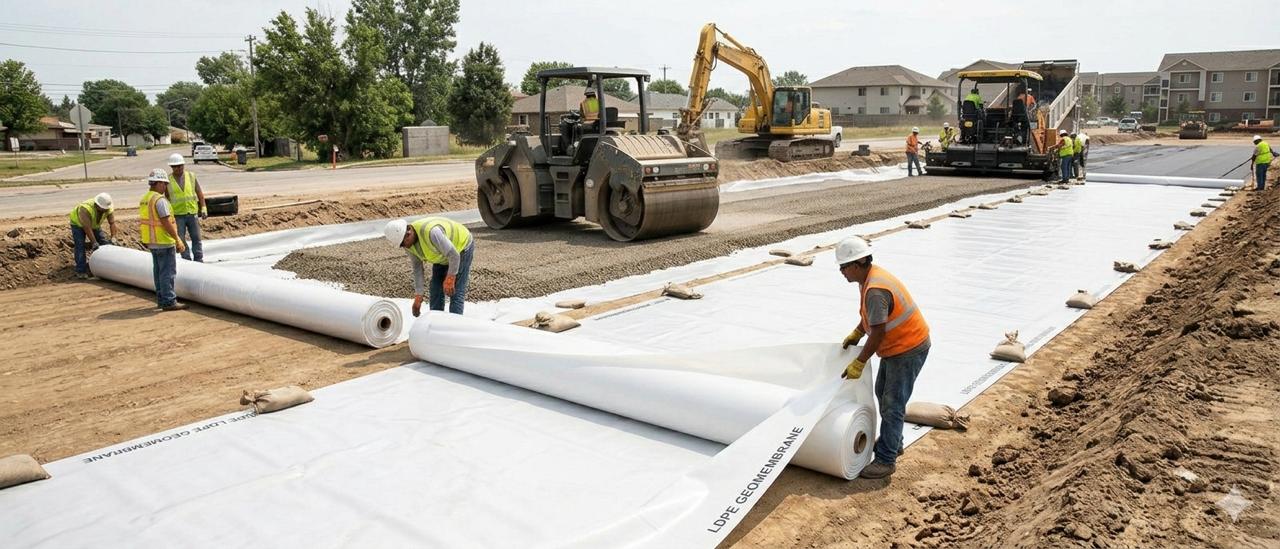 | LDPE SHEET LDPE SHEET MANUFACTURER View product → |
Inspect the Consignment Before You Accept It
Accept only after a documented LDPE sheet inspection confirms the delivered lot against the purchase specification, not merely the supplier’s label.
1. Identify the shipment by lot number, production date, roll number, and certificate of analysis. Check that the certificate reports measured thickness, density, melt-flow result, and test methods. Quarantine material with missing or mismatched records.
2. Sample rolls across the lot, including outer, middle, and inner positions in the shipment. Measure thickness at points across the width and along the length using the method named in the purchase specification. Record the readings against the agreed minimum, maximum, and average limits; a nominal “500 microns” does not establish acceptance.
3. Measure usable width and roll length, then compare them with their stated tolerances. Check the core diameter, maximum roll diameter, mass, winding direction, edge trim, splice count, and pallet protection. Reject or hold rolls with telescoped rolls, crushed edges, contamination, or unapproved splices.
4. Inspect both surfaces under the specified lighting. Record pinholes, gels, black specks, scratches, wrinkles, and other defects by size and frequency. “Smooth” is not an acceptance limit.
5. Confirm colour, surface finish, odour, and visual consistency between sampled rolls. If the sheet is welded, formed, or used as a liner, run the agreed weld, seal, or mechanical test before releasing the lot.
Document photographs, measurements, sample locations, and any concession in the receiving report. That record supports a credit claim when a supplier disputes a defect.
Frequently asked questions
What should an LDPE sheet specification include before requesting wholesale prices?
State thickness and tolerance, sheet or roll dimensions, colour, transparency, polymer grade, additives, surface finish, packaging, quantity, delivery location, and acceptance criteria.
How do you verify an LDPE sheet supplier’s material claims?
Request lot-level evidence such as the batch or lot number, certificate of analysis, thickness readings, test results, manufacturer details, and documents linking the evidence to the quoted material.
How should you compare wholesale LDPE sheet prices?
Compare the delivered cost per usable square metre after accounting for actual dimensions, thickness tolerance, roll or sheet waste, defects, packaging, freight, taxes, minimum order quantities, lead time, and replacement risk.
What should you inspect before accepting an LDPE sheet consignment?
Check packaging damage, labels, lot numbers, roll or sheet dimensions, thickness at several points, colour and surface condition, contamination, tears, holes, and the delivered quantity against the purchase order.