A machine’s category and nameplate capacity do not prove that it will meet your output, site, utility, safety, or deadline requirements. By the end, you will have a practical method for turning the job into measurable specifications, comparing alternatives, checking total cost, and demanding evidence before purchase.
Key takeaways
- Define output, material, quality limits, and deadline before naming a machine.
- Convert the project brief into measurable equipment specifications.
- Test rated capacity against real materials, operators, duty cycles, and site constraints.
- Require a demonstration, acceptance test, spare-parts plan, and response times.
Start with the Work, Not the Machine Name
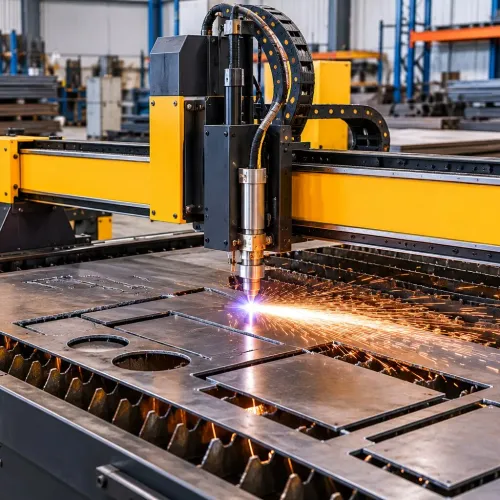
Define the job as measurable work before discussing equipment selection. State the required output per hour, shift, or project; the product or load; acceptable quality; and the completion deadline. “Cut steel” is not a requirement. “Cut 40 mild-steel plates per hour, 12 mm thick, within ±1 mm” is.
1. Record the material condition and grade, maximum and minimum dimensions, weight, profile, moisture, contamination, and surface condition. For earthwork, describe soil type, compaction target, slope, and ground bearing capacity.
2. Set the operating envelope: required output, accuracy or tolerance, cycle time, duty cycle, changeover frequency, working length, reach, lift height, cutting depth, or compaction depth. Include the smallest item, not only the largest; a machine that handles the maximum size can still fail on smaller work.
3. Describe the people and process around it. Note operator skill, loading and unloading method, upstream and downstream equipment, inspection points, safety controls, hygiene rules, and available floor or access space.
4. Confirm site conditions before requesting a quotation. State voltage, phase, peak electrical demand, compressed-air pressure and consumption, water or drainage needs, ventilation, lifting access, foundation or floor loading, anchoring, and ambient temperature.
5. Define the acceptance result: output rate, quality limit, uptime expectation, training requirement, installation date, and evidence needed during trials. Give these project requirements to each supplier in the same format, then ask them to identify every assumption and excluded interface.
Turn the Brief into a Requirement-to-Specification Matrix
A quote becomes verifiable only when every work requirement has a number, condition, test method, and responsible party. Build a requirement-to-specification matrix before requesting prices; reject phrases such as “high capacity” and “heavy duty” unless they have measurable definitions.
| Work requirement | Specification to quote | Verification evidence |
|---|---|---|
| Part geometry | Material grade, thickness range, dimensions, tolerances, and cutting envelope | Sample cut or forming trial using your material |
| Lifting | Safe working load at the stated load radius, lift height and span | Load chart and witnessed load test |
| Forming | Force at stated pressure, tooling, stroke position, and working length | Supplier calculation or trial part |
| Production | Pieces per hour, duty cycle, changeover time, and minimum product size | Factory or site acceptance test |
| Utilities | Voltage, phase, connected load, maximum demand, and compressed-air use at pressure | Electrical schedule and utility test |
| Installation | Floor loading, anchoring, leveling, access, drainage, cable routes, and interface scope | Approved layout and responsibility matrix |
Specify maximum and minimum dimensions. A machine that handles your largest part but cannot process the smallest one is not commercially suitable.
Ask the supplier to mark each line as included, excluded, or dependent on a site assumption. Require the quotation to identify upstream and downstream interfaces, civil work, controls, guarding, and operator training.
For conformity, match the quoted configuration, tooling, options, and site modifications to the declaration of conformity, instructions, and technical documentation. Request the ISO 12100 risk assessment covering production, setup, cleaning, unjamming, maintenance, and foreseeable misuse.
Check Whether Nominal Capacity Works in the Real Job
A 100-ton press can still be wrong for a 6 mm part if the force rating assumes a shorter bend, different tooling, or a specified pressure you cannot supply. Treat rated capacity as a limit under stated conditions, then establish the recommended working capacity for your material, dimensions, tooling, load position, and safety margin.
- Ask for a calculation or trial using your actual material grade, thickness, profile, working length, tooling, and minimum as well as maximum dimensions.
- Record the load centre of gravity and reach for lifting equipment; a crane’s rated capacity falls as the load moves outward on the boom.
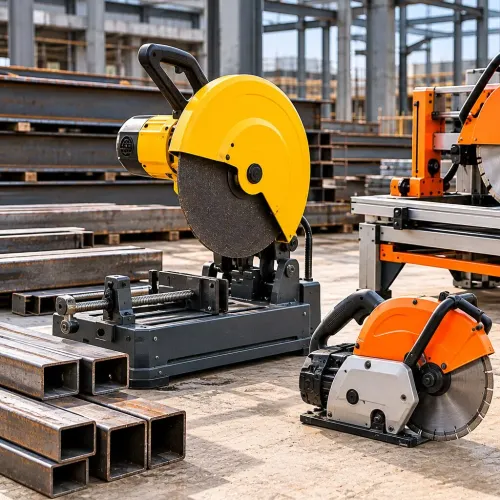
- For cutting equipment, verify the material and profile behind the quoted cutting capacity, including stainless steel, hardened sections, hollow profiles, and angled cuts.
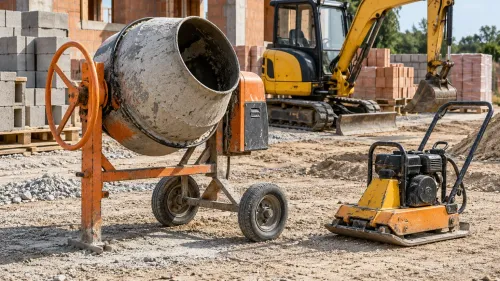
- For rollers and compactors, test the required density or finish on your soil or asphalt, at the specified layer depth, moisture, and number of passes.
- Convert the target output into a duty cycle that includes loading, unloading, setup, tool changes, cleaning, inspection, rejects, minor stops, and planned maintenance.
- Request a sustained throughput model showing availability, performance rate, quality rate, changeover time, and the bottleneck.
Define a measurable acceptance test before purchase. Use representative workpieces, recipes, tooling, utilities, and data records; a dry run proves sequence, not dimensional accuracy or production rate.
Check heat-up, dust control, reject rate, and utility performance during FAT and SAT, then confirm that floor loading, anchoring, ventilation, drainage, and upstream or downstream accumulation will not reduce the result.
Compare Machine Types, Site Interfaces, and Total Cost
Choose the machine that meets usable output at your site, not the one with the lowest purchase price or highest nameplate rating.
| Option | Main advantage | Cost or site consequence |
|---|---|---|
| Horizontal bandsaw versus cold saw | Bandsaws handle varied sections; cold saws deliver faster, cleaner repeat cuts | Compare blade or tooling cost, chip control, coolant, changeover time, and required cutting accuracy |
| Mini crane versus forklift | A mini crane reaches over obstacles; a forklift needs clear travel and load access | Price ground preparation, lifting zones, operator certification, forks or attachments, and transport between work areas |
| Power floater versus walk-behind trowel | A power floater covers large slabs quickly; a walk-behind trowel suits tighter areas and lower output | Include fuel or electricity, access width, finishing labour, and maintenance |
| Vibratory roller versus walk-behind roller | A vibratory roller covers more area and compacts deeper; a walk-behind roller fits narrow edges | Check soil or asphalt response, transport, vibration limits, passes required, and operator time |
Request an interface and responsibility matrix before ordering. Assign foundation strength, floor loading, anchoring, leveling, lifting access, drainage, exhaust routing, cable trays, compressed-air quality, water treatment, thermal loads, and upstream or downstream accumulation to named parties.
Calculate ownership cost from connected load and maximum demand, not motor nameplates alone. Add installation labour, civil and electrical work, tooling, consumables, spares, inspections, downtime, training, and disposal.
CE marking confirms conformity work by the manufacturer or importer; it does not prove productivity or suitability. Verify that the supplied tooling, options, line interfaces, and site modifications match the assessed configuration, then apply ISO 12100 risk controls to guarding, interlocks, access, cleaning, unjamming, and maintenance.
Require a Demonstration, Acceptance Test, and Support Plan
Do not accept a machine because it completes a dry run. Require written, measurable criteria that prove it can perform your work with your material, tooling, utilities, operators, and site interfaces.
1. Define the demonstration before purchase. Specify the representative workpiece, recipe, tooling, cycle time, dimensional tolerance, throughput, reject rate, heat-up time, dust limit, and data-recording method.
A sample cut must show the required profile and tolerance; a weld coupon must meet the stated visual and test criteria; a compaction trial must achieve the specified density at the agreed number of passes.
2. Run a factory acceptance test before dispatch. Record serial numbers, software versions, settings, measurements, alarms, safety functions, connected load, air pressure, water flow, and test results. Treat an unsigned punch list as an incomplete FAT, not a successful demonstration.
3. Repeat the agreed checks in the site acceptance test after installation. Include anchoring, leveling, electrical protection, compressed-air quality, exhaust or drainage connections, upstream and downstream interfaces, operator training, and sustained production over the agreed period. Assign every failed criterion a corrective action, owner, and completion date.
4. Obtain a support plan with named contacts, response times, warranty exclusions, critical spares, preventive-maintenance intervals, remote-support limits, training hours, and escalation steps. Ask RELIABLE IMPEX to place delivery, installation, commissioning, and production-readiness duties in an interface matrix so no civil, electrical, or controls task remains assumed.
Acceptance is complete only when the SAT passes and the supplier hands over manuals, drawings, certificates, calibration records, software backups, and signed test data.
Related products
 | Metal Bandsaw Machine Capacity 200mm cutting Machine Type Horizontal Automation Grade Automatic Usage/Application Metal Cutting Material Mild Steel Model Name/Number MEC... View product → |
 | Mini Crane Capacity 5 Ton Max Height 10 Feet Span 20 m AMC/After Sales Service Provided Power Source Electric Hoist Travelling Speed 0-5 m/min Established in... View product → |
Frequently asked questions
What information should you define before selecting heavy machinery?
Specify the required output per hour, shift, or project; the product or load; acceptable quality; and the completion deadline. Include measurable limits such as cutting 40 mild-steel plates per hour, each 12 mm thick, within ±1 mm.
How does a requirement-to-specification matrix help equipment selection?
It links each project requirement to a machine specification, evidence source, and pass or fail criterion. This exposes missing information and lets you compare suppliers against the same brief.
Why is nominal machine capacity not enough?
Rated capacity may assume ideal material, operator skill, duty cycle, tooling, power, and site conditions. Check actual throughput, quality, setup time, maintenance stops, and site interfaces before accepting the rating.
What should a machinery supplier provide before delivery?
Request a realistic demonstration, written acceptance-test criteria, commissioning responsibilities, operator training, warranty terms, spare-parts availability, and defined technical-response times.
Related products
 | Power Floater roduct Details: Engine Power 35 Hp Material Power Trowel Color Blue And Black Automation Grade Semi Automatic Usage/Application For Construction Is... View product → |
 | Roller Machine Product Details: Automation Grade Semi Automatic Engine Power 110 HP @ 2200 rpm Rolling Width 1250 mm, 1675 mm Warranty 18 Months Vibration Frequency... View product → |
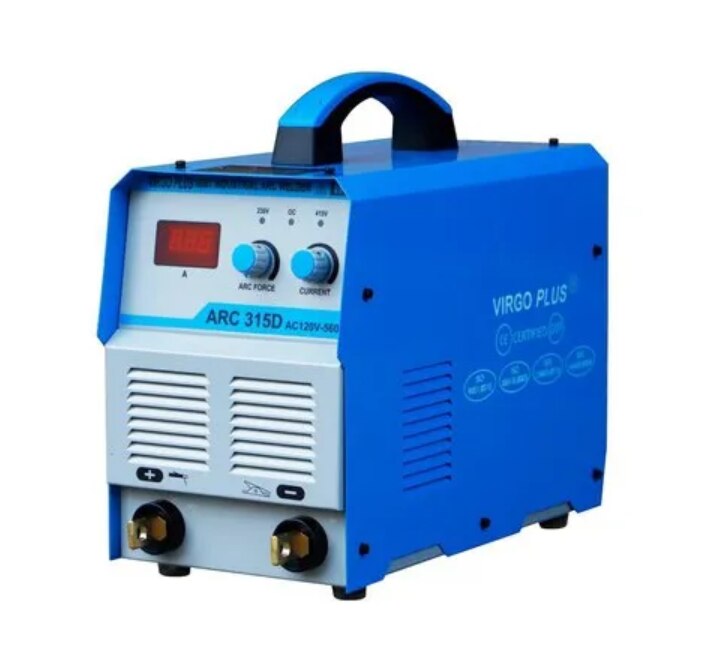 | Welding Machine Minimum Order Quantity 2 Piece Phase Single Welding Type Arc Brand Esab Model 315 AP Insulation A Compatible Rods 8 mm Established in the year 2020... View product → |
 | Walk Behind Roller Minimum Order Quantity 5 Piece Engine Power 5 HP Drive type Manual Rolling Width 1675 mm, 1250 mm Max Roll Weight 330 Kg Approx. View product → |